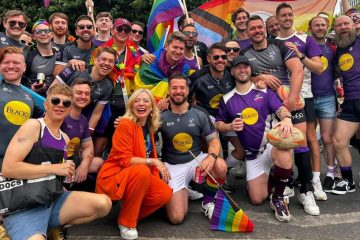
10 reasons why Football v Transphobia deserves your support in March
The annual Week of Action for the Football v Transphobia campaign will be held from March 25 to 31, culminating in Transgender Day of Visibility; this is the eighth year of activation, delivered as part of the wider Football v Homophobia initiative; learn more about #FvT2026 and how you can be part of it…
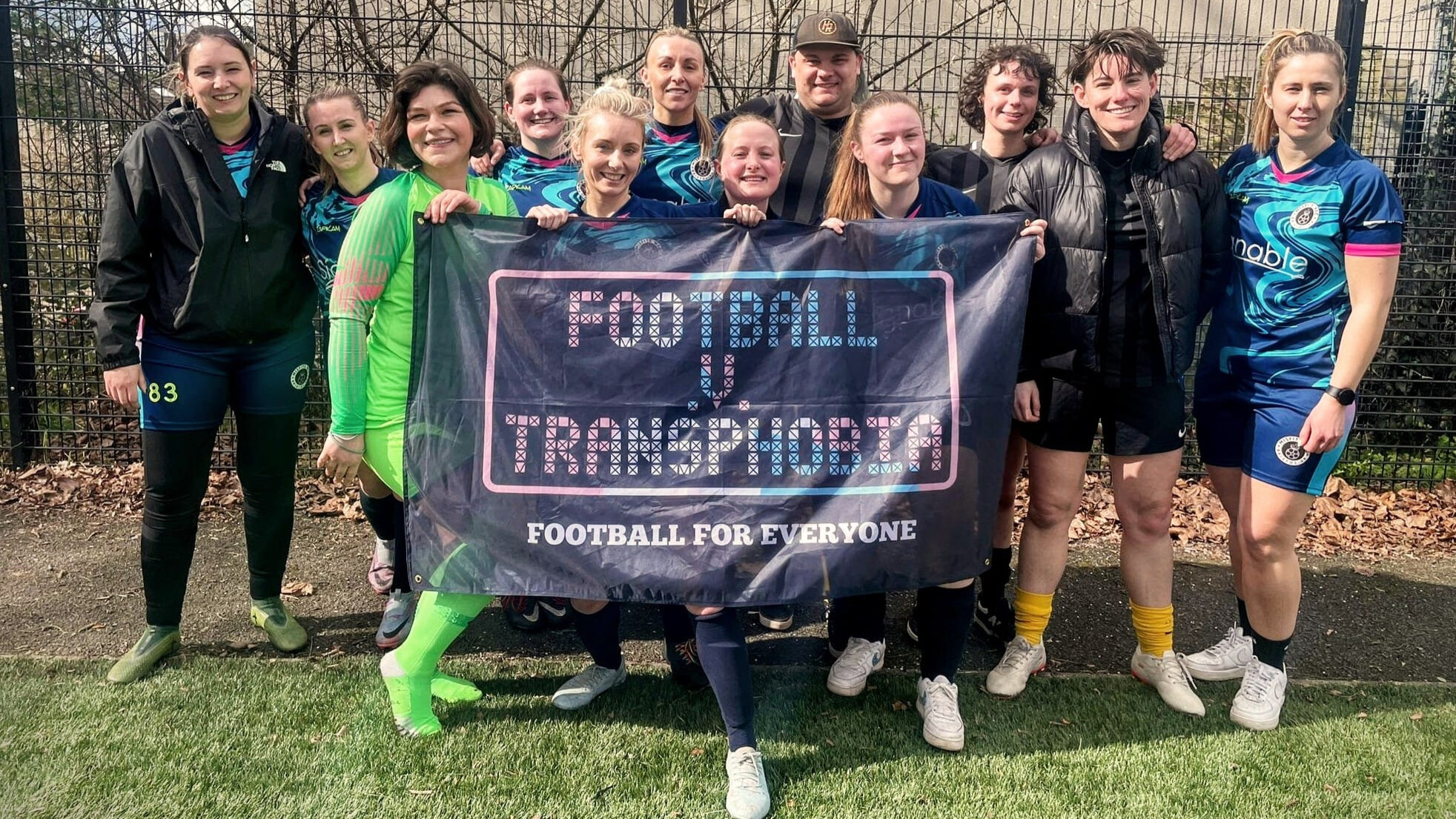
Every year, the month of March concludes with International Transgender Day of Visibility, a time to celebrate the representation and contributions of trans people, and consider the ongoing challenges faced by the community.
Since 2019, the Football v Transphobia initiative has focused its annual activity around the March 31 awareness day.
For #FvT2026, a dedicated Week of Action beginning on March 25 will provide a platform for clubs, teams, leagues and fan groups across the game to help tackle this type of discrimination at all levels of the game, and promote the ‘Football for Everyone’ message.
Discriminatory language and behaviour that references sex, gender and gender reassignment continues to be a serious issue in football. Players, coaches, match officials and fans are among those who may find themselves targeted with anti-trans prejudice, hostility or harassment, whether or not they identify as trans or non-binary.
Football v Homophobia, which delivers FvT as a strand of the wider campaign, is suggesting various opportunities to engage this month. You can sign up for #FvT2026 on the website; consider designating a matchday or activity; get an FvT flag or T-shirt in the Shop; share a story that encourages allyship; or show support in another way.
Here are 10 reasons to talk about Football v Transphobia this month…
Transphobia is a type of discrimination that is highly damaging and causes people to disengage from football. You don’t have to be trans yourself to be affected by transphobia, and there needs to be greater awareness across the game to tackle the issue and its impact.
Reports of transphobia to Kick It Out are rising year on year. This tells us that some people who are involved in the game are increasingly being made to feel unwelcome and unsafe in football spaces based on their gender identity and/or expression, due to the way these are ‘policed’ by others. Everyone in football shares in a collective responsibility to create welcoming environments in which people can be themselves and thrive. Read more on the Kick It Out website.
Transphobia often manifests alongside homophobia, sexism, misogyny, racism and other forms of discrimination. In football spaces, insults and slurs may be connected to one or more of the following: hairstyles, whether short or long; body art or piercings; clothing choices; physicality, build and strength; cultural interests; and expressions of allyship towards trans and non-binary people.
Since last year’s FvT Week of Action, a ruling made by the U.K. Supreme Court has led to the football authorities in England and Scotland making decisions that restrict the participation of trans women in affiliated women’s football. A by-product of this has been heightened scrutiny on women and girls at all levels of the game, particularly those who may be considered by others to be non-conforming in terms of their gender. By recognising the impact of these decisions, the relevant football authorities should support education that helps people to identify transphobia and encourages them to challenge and report discriminatory language and behaviour with confidence.
Outside of affiliated women’s football in England and Scotland, grassroots clubs, teams and leagues continue to create opportunities for trans people to play football. You may see the initialism FLINTA* being used to describe these spaces. FLINTA* originated in Germany and stands for Frauen (Women), Lesbians, Intersex, Non-binary, Trans, and Agender. The FvT campaign seeks to encourage the provision of FLINTA* and trans-inclusive football more widely – ‘Football for Everyone’ – and the Week of Action is an ideal opportunity to highlight these spaces.
For trans men, the English and Scottish football authorities’ decisions regarding the affiliated game have also had a significant impact. The stipulation that trans men seeking to play men’s football must sign a declaration about their sex recorded at birth is discouraging and dehumanising, and has been described as a ‘de facto’ ban. By amplifying FvT, you will also be helping to raise awareness about the limitations now enforced upon trans men who would like to access the affiliated men’s game.
For fans who are trans and non-binary, attending matches can be a daunting experience, particularly for those who don’t go to games regularly. Many pro clubs have LGBTQ+ and women’s supporters groups which offer ‘buddy’ schemes for first-time visitors to stadiums, and/or pre and post-game meet-ups. Through support for the Week of Action, FvT invites fan groups at all levels to promote their initiatives for trans+ people, alongside their clubs, leagues and community foundations. Follow Pride in Football on Instagram.
Stories of lived experience are vital for the LGBTQ+ community, inviting empathy and inspiring others. There are examples of trans people achieving their ambitions in football; navigating and overcoming challenges; breaking down barriers; and campaigning for greater inclusion. The #FvT2026 Week of Action is an ideal opportunity to work with members of the trans community and, where possible, share stories constructively through the media and social media to educate and inform. Some recommended content…
- Lars Fellows on the FvH Podcast (August 2025)
- Natalie Washington interview (DIVA Magazine, July 2025)
- Watch the trailer for ‘We’ll Go Down In History’ – TRUK United FC documentary (released March 2025)
- Courtney’s Story (Charlton Athletic FC, March 2025)
Visibility for trans people is particularly vital this year. The impact of fewer trans people being involved in football compared to 12 months ago means that the community is at risk of becoming hidden in the game. While being visible can present challenges, there is a clear need to challenge propaganda and misinformation about trans people, and ensure they can see themselves reflected in sports and society.
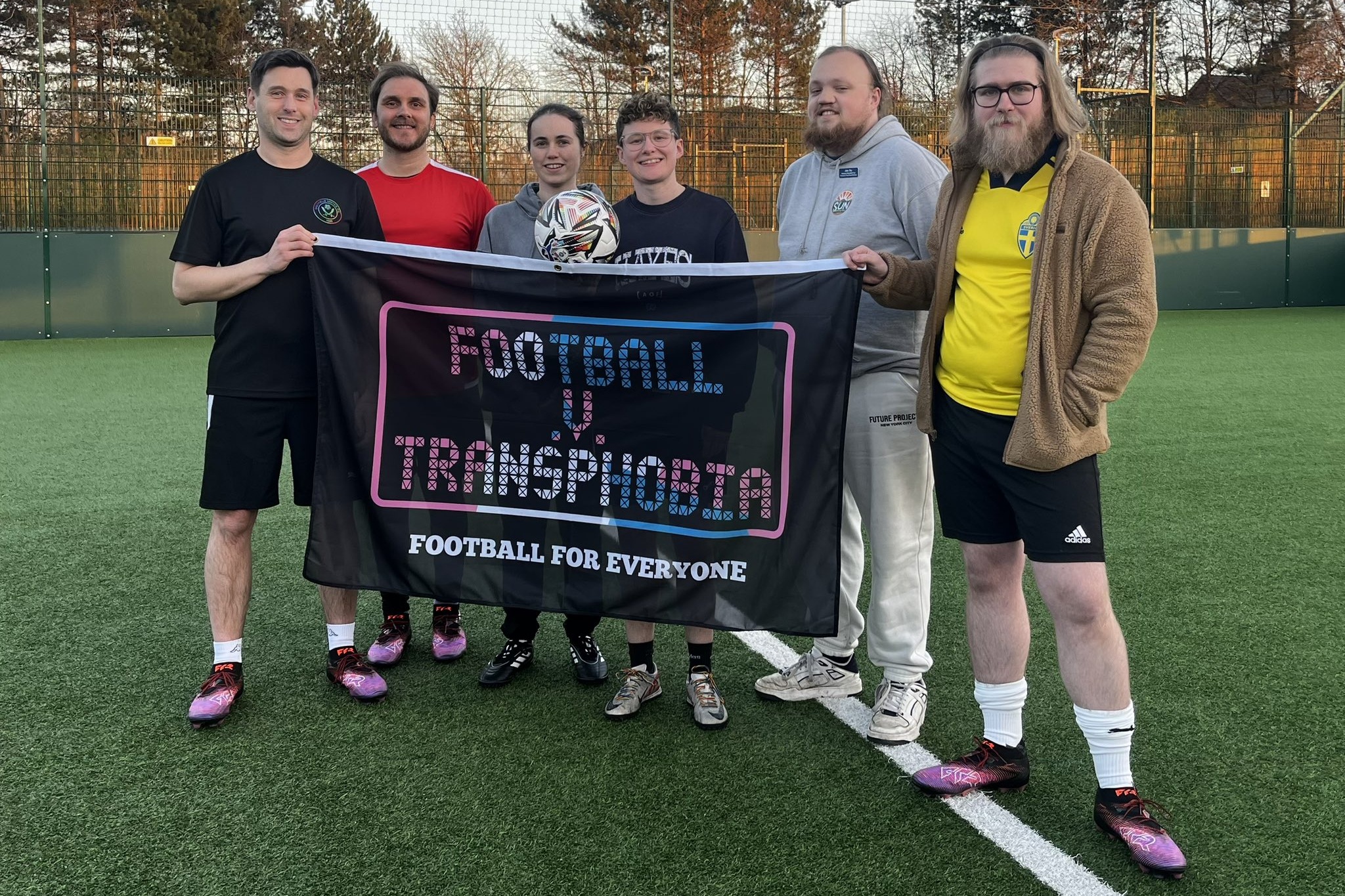
We must not allow discrimination to take over from trans inclusion as the main narrative in football. Participation is a crucial way for trans people to build community connections, be active, and enjoy the associated benefits of mental wellbeing. With recent events having made trans people feel less welcome, supporting #FvT2026 is a meaningful response to counter the rise in reports and the damaging trend of transphobia.
What’s next?
- Sign up for the FvT Week of Action here! Let us know how you plan to activate the campaign.
- Take a look in the Shop… why not buy an FvT flag or T-shirt? Show your support on social media, during the seven-day period from Wednesday, March 25, to Tuesday, March 31, using the hashtag #FvT2026.
- Create content that reflects the experiences of trans people in football. Amplify the voices of players, coaches, match officials, fans etc who are trans and non-binary, in a responsible and empathetic way. Visit our FvT archive for inspiration.
- Reach out to connect with Football v Transphobia. Let’s work together and tackle discrimination in the game we all love. You can email the campaign or send a DM on socials (Instagram, Bluesky, Facebook, Threads, LinkedIn, or X).
What’s next?
Sat 21 March (1.45pm to 5pm) – TReNBI FC – Football v Transphobia tournament (Brighton)
Tue 24 March – Fair Game Conference Day 1 – FvT workshop session, 1030-1200 (National Football Museum, Manchester)
Wed 25 Mar – Fair Game Conference Day 2 – Natalie Washington in conversation with Chloe Morgan, 1130-1200 (National Football Museum, Manchester)
Wed 25 to Tue 31 Mar – Football v Transphobia Week of Action
Thu 26 Mar (5pm to 8pm) – Changing the Game: Football, Identity & the Future of Wrexham (Tŷ Pawb, Wrexham)
Sat 28 Mar (10pm to 5pm) – West London Queer Project Festival of Football (Osterley, west London) – followed by Afterparty in Chiswick (from 7pm)
Mon 30 Mar (7pm to 9pm) – Stenhousemuir Rainbow Warriors FvT Festival (Ochilview Stadium, Stenhousemuir)
Mon 30 Mar (7.30pm) – Dinamo vs Transphobia: Film screening and kit sale (Nunhead, southeast London)
Tue 31 Mar – Transgender Day of Visibility
Tue 31 Mar (8.15pm) – ‘We’ll Go Down in History’ + Q&A + Trans Short Films (The Arzner Cinema, Bermondsey, London)

Football v Transphobia is an international initiative that exists to challenge discrimination based on gender identity and gender expression at all levels of the game. It is delivered by Football v Homophobia (Pride Sports).
First launched in 2019, Football v Transphobia receives an annual Week of Action from March 25 to 31, in the seven days leading up to Transgender Day of Visibility.
The Week of Action calls on individuals and organisations at all levels of football to take meaningful action to create more LGBTQ+ inclusive spaces in the game and address all forms of discrimination.
The Sports Media LGBT+ website is a digital publishing hub for news, stories and opinion from across our global community of LGBTQ+ people and allies in sport – and it’s open to all.
We’re interested in your content. Share with us and tap into a worldwide audience through our Google News affiliate website and our popular social channels with over 20,000 followers. Contact us to discuss how we can help you. You can also learn more about our network, advocacy, and consultancy group here.