On the World Cup, homophobia and transphobia, and creating space
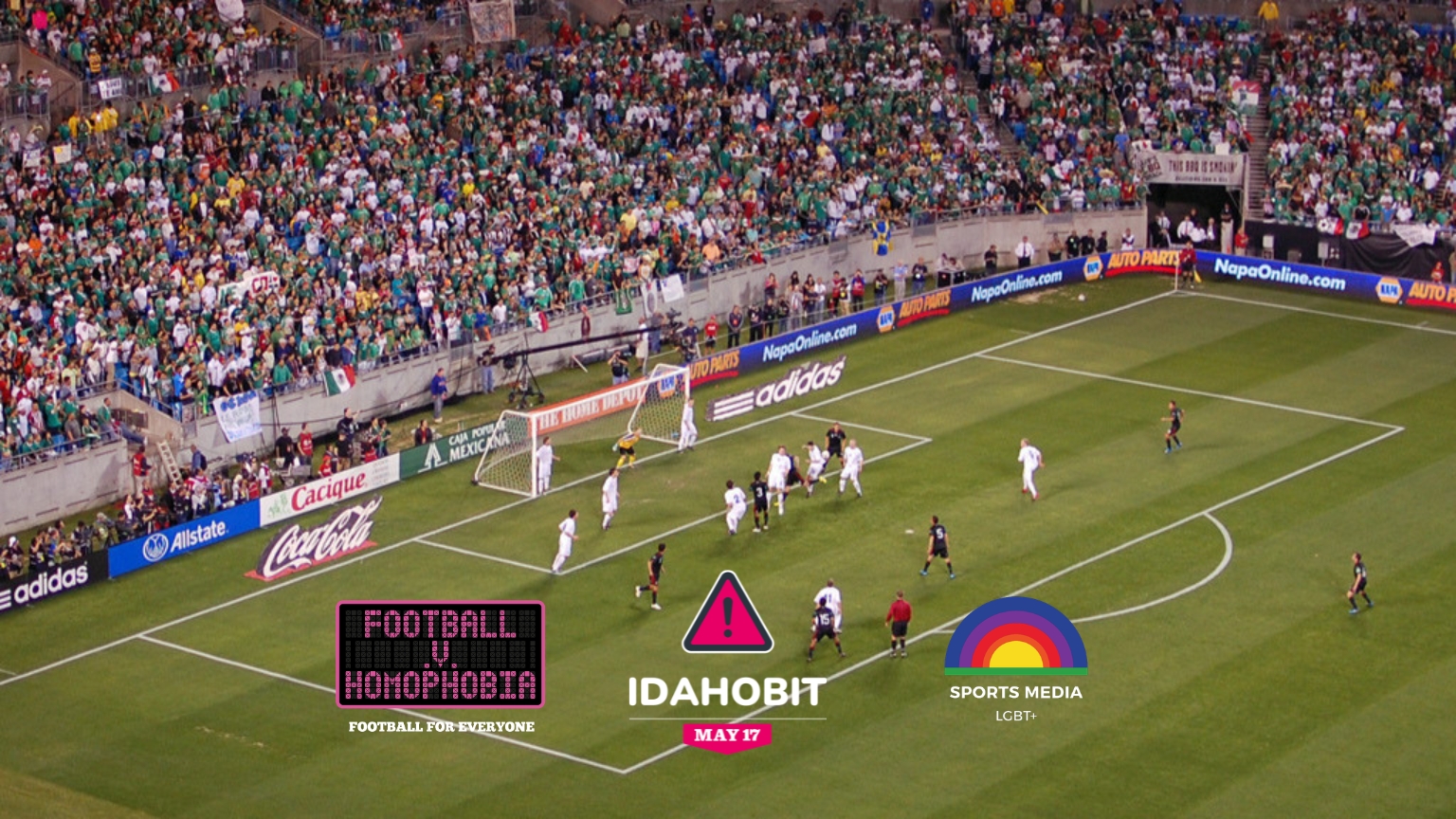
May 17 is IDAHOBIT – the International Day Against Homophobia, Transphobia and Biphobia – and marks 25 days to go until the World Cup; anti-LGBTQ+ discrimination in and around the tournament is a major concern, and is being highlighted by the Football v Homophobia campaign…
One of the most eye-catching artefacts in the National Football Museum in Manchester connects Football v Homophobia with the World Cup.
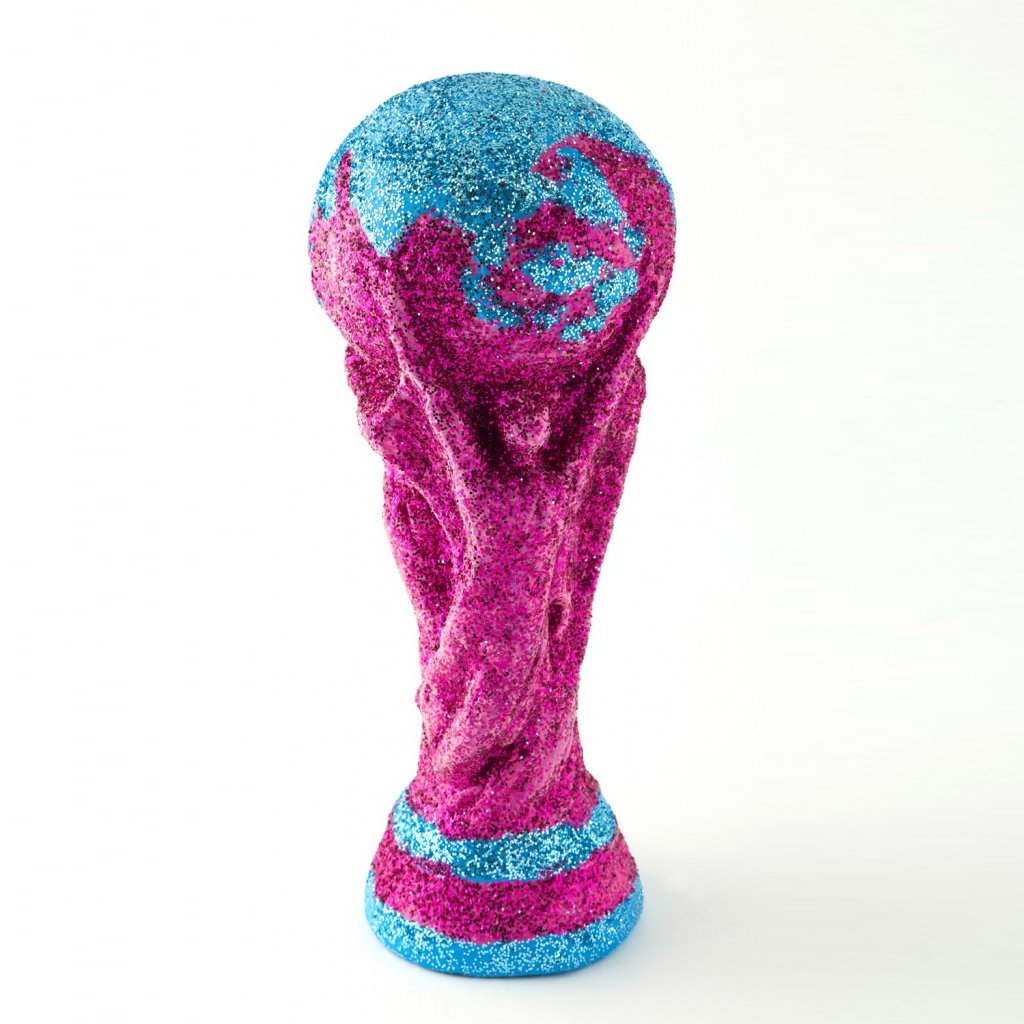
Sparkly and symbolic, the bright-pink-and-blue “Justin Fashanu Cup” was created for a five-a-side tournament organised by The Justin Campaign, which launched FvH as an anti-discrimination initiative in 2010.
NFM curator Dr Alex Jackson says the trophy is a significant item in the collection. “It’s part of a wider display looking at the history of leading Black players, and campaigns against racism and homophobia in football,” he explained to me this week.
“When it arrived at the museum in 2011, I opened the box on my desk – both myself and the desk remained glittery for some time afterwards!”
For many visitors, the trophy provokes thoughts and conversations about LGBTQ+ visibility in the game. This is always a talking point at World Cup time, not least because of the vast difference in representation between the women’s and men’s tournaments.
With just over three weeks to go until World Cup 2026 begins in Mexico City, May 17 is IDAHOBIT – the International Day Against Homophobia, Transphobia and Biphobia.
The importance of tackling these forms of discrimination needs discussion as we prepare for a 104-game competition that will take place during Pride Month and will almost certainly be the most-watched sporting event in history.
The vast majority of matches will be played in the United States, where there has recently been a rollback of LGBTQ+ rights and protections at the state and federal levels, with the greatest impact felt by trans and non-binary people.
Here are some key concerns, specifically relating to the World Cup…
FIFA sidelines ‘Unite for Inclusion’ messaging
FIFA has announced its lineup of social impact campaigns to be featured across stadium screens, LED boards, and player sleeve patches at all 16 World Cup venues. The tournament will highlight five initiatives – “Football Unites the World,” “No Racism,” “Be Active,” “Unite for Peace,” and “Unite for Education”. The specific “Unite for Inclusion” campaign has been conspicuously omitted.
During the 2023 Women’s World Cup, “Unite for Inclusion” was one of the core campaigns, used to explicitly promote the fight against all forms of discrimination, including LGBTQ+ inequality and gender bias.
FIFA’s decision to drop this messaging for the men’s World Cup could be viewed as a tactical retreat to avoid potential political friction. Incidents of homophobic language and behaviour remain a serious issue in men’s football. Still, there is little to suggest that any of FIFA’s chosen social impact campaigns will address this during the tournament.
Online homophobic abuse ‘prolific’ at 2022 World Cup
Data compiled from the Qatar World Cup four years ago reflected a toxic environment for players, coaches and match officials on social media, with homophobia identified as one of the most prolific forms of targeted harassment.
A comprehensive tournament analysis conducted by FIFA and the players’ union FIFPRO via the Social Media Protection Service (SMPS) monitored over 20 million messages across platforms like X, Instagram, Facebook, TikTok, and YouTube.
The service flagged hundreds of thousands of posts, ultimately confirming nearly 20,000 cases of severe discrimination. FIFA’s report said: “While 26% of the total detected abuse was classified as ‘general abuse’, a further 17% was sexual in nature. Sexism (13%), homophobia (12%) and racism (11%) were also particularly prolific.”
In the last few years, the social media platforms have only become more hostile, with “ragebait” and engagement farming frequently referencing LGBTQ+ people. The issue of online abuse continues to grow.
On the back of independent research into the levels of online abuse at two previous international tournaments, FIFA and @FIFPRO established the Social Media Protection Service. Here is a look at the levels of abuse around those two events and the @FIFAWorldCup final: pic.twitter.com/AZZIbalSYo
— FIFA (@FIFAcom) June 18, 2023
Rise in incidents of gay slur chant in Mexico
In the build-up to the World Cup, co-hosts Mexico have experienced a resurgence in the homophobic chant from fans which targets goalkeepers.
Over the years, there have been attempts to tackle the discriminatory chant through awareness campaigns, stadium closures, and fines. Despite this, the problem persists, and has been documented again during recent Liga MX and CONCACAF fixtures.
Compounding the issue, as reported by AP, the chant was heard during the intercontinental World Cup playoff matches in Mexico a few weeks ago – games that did not even feature a Mexican team. It appears some local fans were teaching the slur to visiting supporters.
With 13 World Cup matches scheduled for Mexico City, Monterrey and Guadalajara, and the chance that some fans in stadiums in the U.S. and Canada could sing the chant too, there will need to be agreed protocols for match officials, announcers and safety officers to follow consistently.
Mexico 🇲🇽 In Mexico, a homophobic chant was heard during recent matches, including friendlies against Portugal and CONCACAF Champions Cup games. The Associated Press has analysed the issue and discussed it with LGBTQ activist Andoni Bello. buff.ly/pGNxoMl
— Fare network (@farenet.bsky.social) April 22, 2026 at 12:45 PM
[image or embed]
Prestianni’s ban, and football’s indifference
Already, we have a player who must serve a suspension during the World Cup for homophobic language.
Gianluca Prestianni has been named in Argentina’s provisional squad for the tournament, but could yet miss out because he is banned for the holders’ first two group games. The Benfica winger was punished by UEFA for abusing Real Madrid’s Vinicius Jr. in a Champions League game in February.
Prestianni admitted using a word that is a gay slur, having denied accusations of racism. He argued that “maric*n” would not be considered homophobic in Argentina, but UEFA dismissed his claim.
Notably, there was minimal comment from pundits, players and fans on the Prestianni case’s verdict, compared to the reactions in the immediate aftermath of the incident. In between, Real’s goalkeeper Thibaut Courtois said: “It seems as bad to me. Those are homophobic insults, and it’s as serious. Racism, homophobia… we cannot accept those things ever.”
The Belgium international’s comments were welcome, but similarly influential voices are rare on this topic. In the ongoing absence of any publicly out gay or bi men who are active in elite football on the pitch, it can often feel as if there is a general disregard or indifference to the issue of homophobia.
Safety of LGBTQ+ travellers and matchgoers in focus
The U.S. is stepping up its vetting and visa requirements for international visitors. A recent update on the American Embassy in Berlin’s Facebook page emphasises the requirement for some travellers to open up their private social media profiles to government scrutiny.
This specific instruction is for people applying for non-immigrant visas, but checks may also be carried out on the histories of those heading to the World Cup using the Visa Waiver Program (VWP), the pre-approval process via ESTA.
Particularly for those who are trans and non-binary, there will be concerns over security and identity screenings, whether coming through border control or at stadium checkpoints on matchdays. The risk of discrimination is high.
England’s official LGBTQ+ supporters group Three Lions Pride referenced the concerning situation when announcing its decision not to have a visible presence at its team’s World Cup games in the U.S.
As seen on official US embassy Facebook page
— Dr Dan Shugar 🇨🇦 (@watershedlab.bsky.social) May 16, 2026 at 5:04 AM
[image or embed]
Sadly, it appears incidents of LGBTQ+-phobia connected to the tournament will be inevitable this summer. FvH exists to challenge this discrimination and encourage greater advocacy.
You can take positive action in various ways. For those who will be in the U.S., Canada and Mexico, the network of Pride House United 2026 venues and projects would welcome your support. Whether attending a special event, going to watch a game, or swinging by to take a look, please go and visit your nearest Pride House.
Donating to a non-profit organisation that is making a difference for LGBTQ+ people in football / soccer is a great way to show support. Some examples include:
- Mexico – ANADE; DIDESEX
- U.S. – Athlete Ally; Philadelphia Falcons; Pridelines (South Florida); San Francisco LGBT Center; West Hollywood Soccer Club
- Canada – Egale; You Can Play
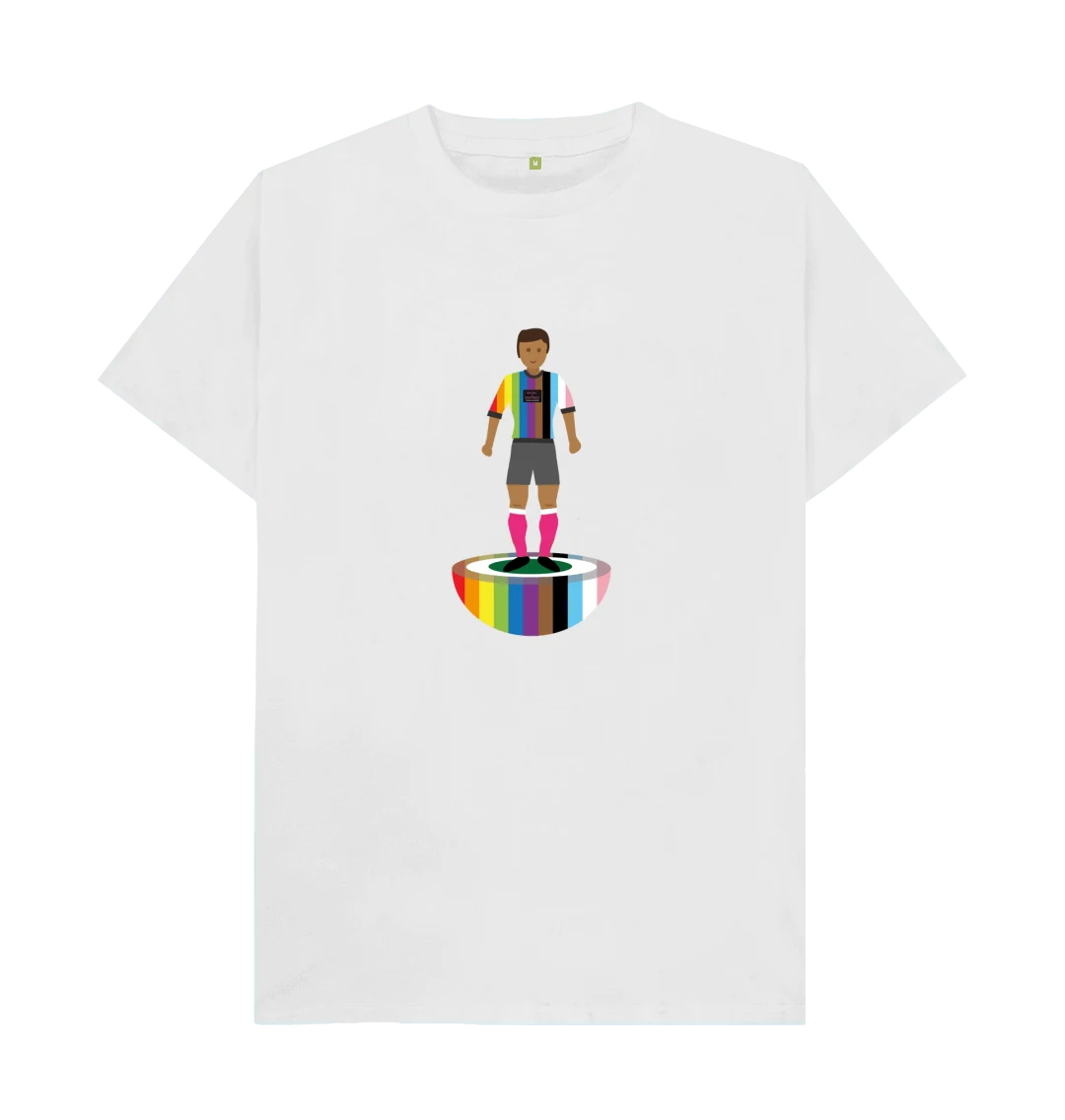
Freshening up your wardrobe for the World Cup? Why not treat yourself to something from the FvH Shop! Whether you’re wearing the classic pink-and-black FvH logo T-shirt or one of our fashion tees, such as the Subbuteo-style figure in Progress Pride colours, you’ll stand out in a crowd and help FvH at the same time.
For those of you attending the World Cup, get ahead of the game and order today!
With the tournament kick-off fast approaching, campaigns such as ours are shining a light on important causes and issuing calls to action.
Our focus is on tackling discrimination. With June being Pride Month, we also want to celebrate the contributions of LGBTQ+ people and allies in football everywhere and create the space to share our stories.
By challenging homophobia, biphobia and transphobia, and supporting each other in the community, we can find our place in this World Cup. United we stand.
Visit www.footballvhomophobia.com for more information about the campaign.
Check out our archive of related content, including episodes of the FvH Podcast.
Follow and like FvH on Instagram, Facebook, Threads and Bluesky to stay updated.
The Sports Media LGBT+ website is a digital publishing hub for news, stories and opinion from across our global community of LGBTQ+ people and allies in sport – and it’s open to all.
We’re interested in your content. Share with us and tap into a worldwide audience through our Google News affiliate website and our popular social channels with over 20,000 followers. Contact us to discuss how we can help you. You can also learn more about our network, advocacy, and consultancy group here.