Targeting of trans and DSD athletes is exactly why LGBTQ sports events like Gay Games and EuroGames exist
With genetic screening and sex tests for women’s competitions returning to the Olympics, the impact will increasingly be felt outside the elite; it means the Gay Games, EuroGames and the global network of LGBTQ-inclusive grassroots sports teams take on extra importance – but they need additional support…
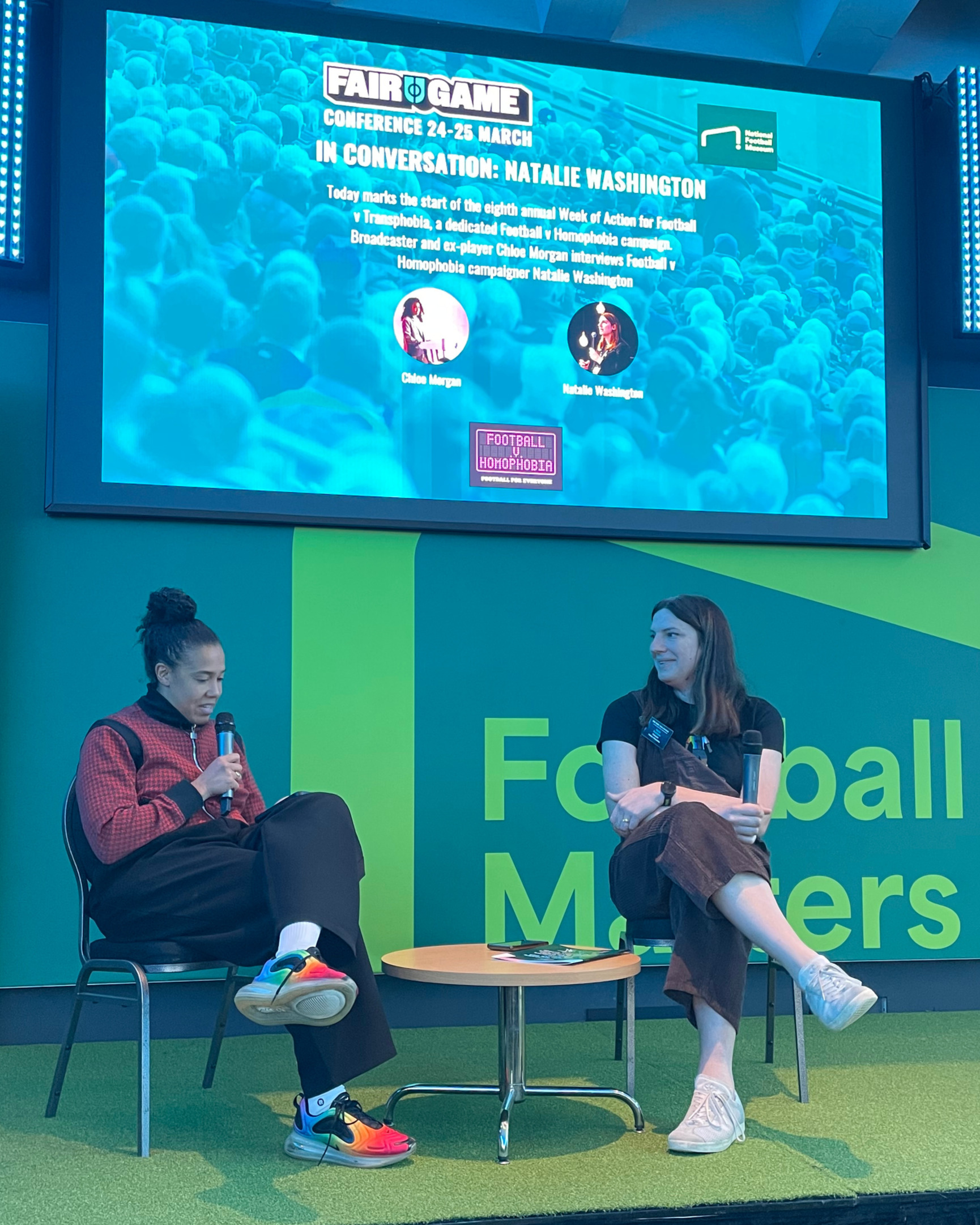
At the recent Fair Game UK Conference, the campaigner and EGLSF Advocacy Award winner Natalie Washington was asked about the knock-on effects of English football’s move away from trans inclusion.
The Football v Transphobia lead, who is among around 25 players whose access to the women’s game was removed following The FA’s policy change last year, was honest about the situation.
The promised outcome of the Supreme Court ruling in April 2025 was “clarity”, but Washington highlighted areas of ongoing confusion and concern in British sports.
“Where can we go next?” she asked rhetorically, in a fireside chat with Chloe Morgan at Manchester’s National Football Museum.
“It’s very hard to even think about that right now, because everything is so hamstrung by ambiguity about the law, ambiguity about policy, and fear of the anti-trans movement, which has essentially unlimited resources and will sue anyone for anything.”
In cricket, the ECB’s rush to enforce a blanket ban may have contravened the Equality Act, with legal action underway; in football, the FAs of Wales and Northern Ireland have not announced changes to their policies, unlike their English and Scottish counterparts; and all the while, national governing bodies continue to be chased on these matters and, in some instances, threatened with lawsuits.
The day after the Fair Game conference, the International Olympic Committee announced a policy change that reintroduces mandatory SRY gene screening for women, for the first time since 1999. Any athlete who screens positive for SRY must agree to “further evaluation” or be ruled ineligible.
Yet the IOC policy wording accepts there is still room for uncertainty – athletes with “rare XY DSDs” would be cleared to compete – and the case of Taiwanese boxer Lin Yu-ting suggests further complications down the line.
Meanwhile, international federations and NGBs must try to adapt quickly. Some, like World Athletics, made their moves before the IOC, and the consequences are already being felt. It was revealed last month that British women wanting to compete internationally had been left “stunned” when cash-strapped UK Athletics told them to pay for their own tests, which cost £185 each.
April 2026 began with a warning to organisations from one lobby group that it would be “applying pressure” on them to impose more “protective” policies. As the UKA example shows, this could prove very expensive for NGBs.
Despite this, and emboldened by the tightening of restrictions at the elite level, the lobby groups are now going after recreational sports as well.
Gay Games and EuroGames are essential events
It would be understandable if these developments make you feel overwhelmed, but Washington’s realism about the scale of the challenge ahead also signals an opportunity for the LGBTQ-inclusive sports community.
In 1982, the inaugural Gay Games event in San Francisco set out to break down stereotypes and welcome all athletes. A decade later, the first-ever EuroGames in The Hague had similar objectives. Since then, the number of clubs, teams and leagues for LGBTQ people and allies around the world has grown at an impressive rate.
In some respects, the stereotypes that Gay Games founder Tom Waddell wanted to smash have softened. But the way in which trans people are being ostracised in today’s society, and the resultant scrutiny on anyone with a gender non-conforming presentation, expression or identity, shows how other stereotypes are hardening.
It’s a sign of the times that questions such as ‘why do we still need LGBTQ teams?’ are being asked less frequently. Meanwhile, attempts to foment division among us keep failing, as evidenced by the enthusiasm for slogans like ‘No Football Without The T’ and ‘Let The Dolls Play’ in recent Football v Transphobia campaign activations.
And with the IOC and other major organisations looking less likely than ever to fund vital research or support initiatives that would help sports to remain inclusive, the status of LGBTQ multisports events is elevated.
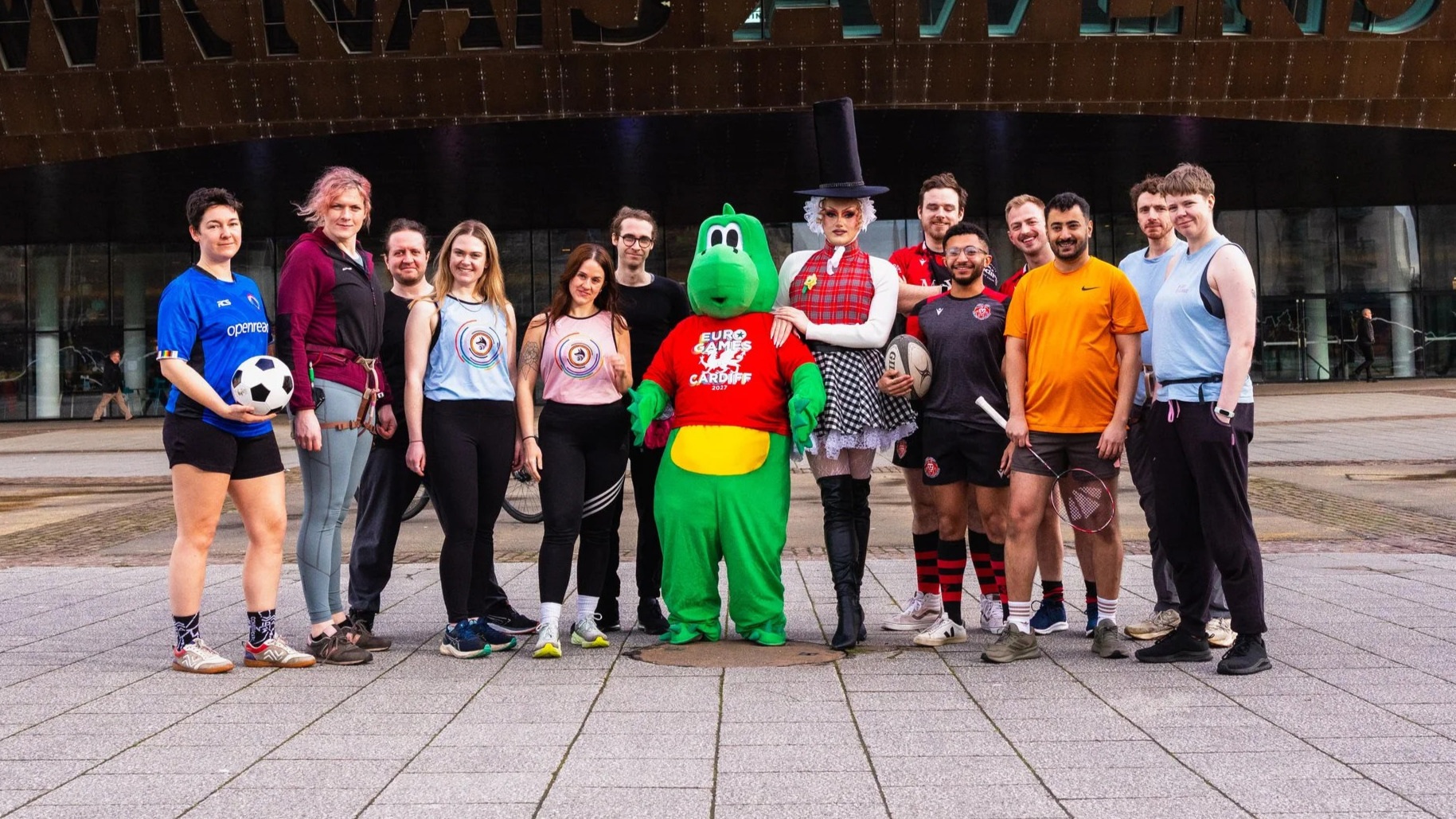
Just competing in the Valencia Gay Games becomes a powerful display of trans allyship, while signing up for EuroGames Cardiff 2027 when the registration window opens in May is also a clear demonstration of community spirit.
“ALL women are welcome to compete at Cardiff EuroGames 2027,” said the event’s organisers after the IOC announcement, while EGLSF also issued a statement. “[We] will continue to uphold inclusive participation policies, and these will not change,” it read.
“We remain committed to creating spaces where transgender and intersex people can participate fully and safely in sport, without being subjected to invasive or discriminatory practices.”
@eurogames.2027 Croeso i Gymru. 🏴 Land of fire. Of song. Of queer joy! 🏳️⚧️🏳️🌈 Where sport lives in the streets, in the pubs, in the stories we tell about who we are. This St David’s Day, we celebrate Wales. The people, the culture and everything we have to offer! We cannot wait to show you around. Registration for EuroGames 2027 opens this May. So get ready! Bring your fire! Dewch â’r tân! Dydd Gŵyl Dewi Hapus. #stdavidsday #cardiff #eurogames2027 #lgbtsports ♬ original sound – EuroGames 2027
The Federation of Gay Games was similarly unequivocal in its response to the IOC policy. “The FGG remains committed to a model of sport that prioritises participation, inclusion, and human dignity,” it said.
“At Gay Games XII, taking place from June 27 to July 4, 2026 in Valencia, athletes are welcomed to compete in categories that reflect their gender identity, without the requirement for legal or medical documentation.
“With more than 8,500 participants expected across 37 sports and cultural events, the Gay Games continues to demonstrate that inclusive sport is not only possible – but thriving.”
The organisers of the 2030 event in Perth, Australia, echoed this commitment, saying: “Trans and gender diverse athletes are welcome, celebrated, and valued at the Gay Games. Full stop.”
These pledges are definitive, but to be truly effective, they need to be backed up with everything else that makes LGBTQ-inclusive sports so special – activism, advocacy, pride, and passion, and yes, the community showing up meaningfully for the big occasion through sign-ups and sponsorship.

In her call to action to the conference audience in Manchester, Washington stressed the importance of engagement. Large-scale events will flourish if influential figures and organisations from the worlds of business, media and sports get behind them.
In turn, this can lead to greater promotion and bring in vital investment, which will trickle down to support grassroots clubs year-round.
“I’m a big believer in brave leadership,” she said. “But we can’t expect leaders to do that if we don’t explain to them what the challenges are and what we’re asking for.”
It’s more apparent than ever before that the very principle of inclusive sports is under threat. That’s a scary prospect, and a lot of LGBTQ people – particularly those who are most marginalised – would risk losing out on something they love, even at the entry level.
Reducing ambiguity and dispelling fear can prevent that from happening. Amplifying the messages of the Gay Games and EuroGames is a simple way to contribute towards achieving the goal.
That’s why we must continue to be clear about the purpose of sport, and courageous enough to speak up for our fellow athletes who are being targeted.
Because as the Valencia 2026 website says: “Here, everyone is welcome, and every participation counts.”
Further reading…
With 100 days to go, Gay Games Valencia has 8,000 sign-ups – including a Drag Race queen (Outsports, March 2026)
Jess Fishlock says EuroGames Cardiff 2027 ambassadorial role ‘important for visibility’ (BBC Sport, March 2026)
Stonewall warns of deepening division after IOC bans trans women from Olympic Games (SceneMag, March 2026)
To learn more about EuroGames Cardiff 2027, visit the official website where you can sign up for email updates.
Interested in sponsorship and partnership opportunities? Email the team at info@pridesports.cymru.
Sports Media LGBT+ is a network, advocacy, and consultancy group that is helping to build a community of LGBTQ+ people and allies in sport. We’re also a digital publisher and can help with your content requirements. Learn more about us here.
We’re interested in your news and stories. Share with us and tap into a worldwide audience through our Google News affiliate website, which attracts thousands of visitors, and our popular social channels. Contact us to discuss how we can help you.