Five things sports media can learn from ‘Heated Rivalry’
Welcome to the world of Major League Hockey, as the TV drama everyone’s talking about lands in the UK and Ireland via Sky; here’s what the show can teach sports editors and journalists, and why that’s so important to their relationship with LGBTQ audiences…
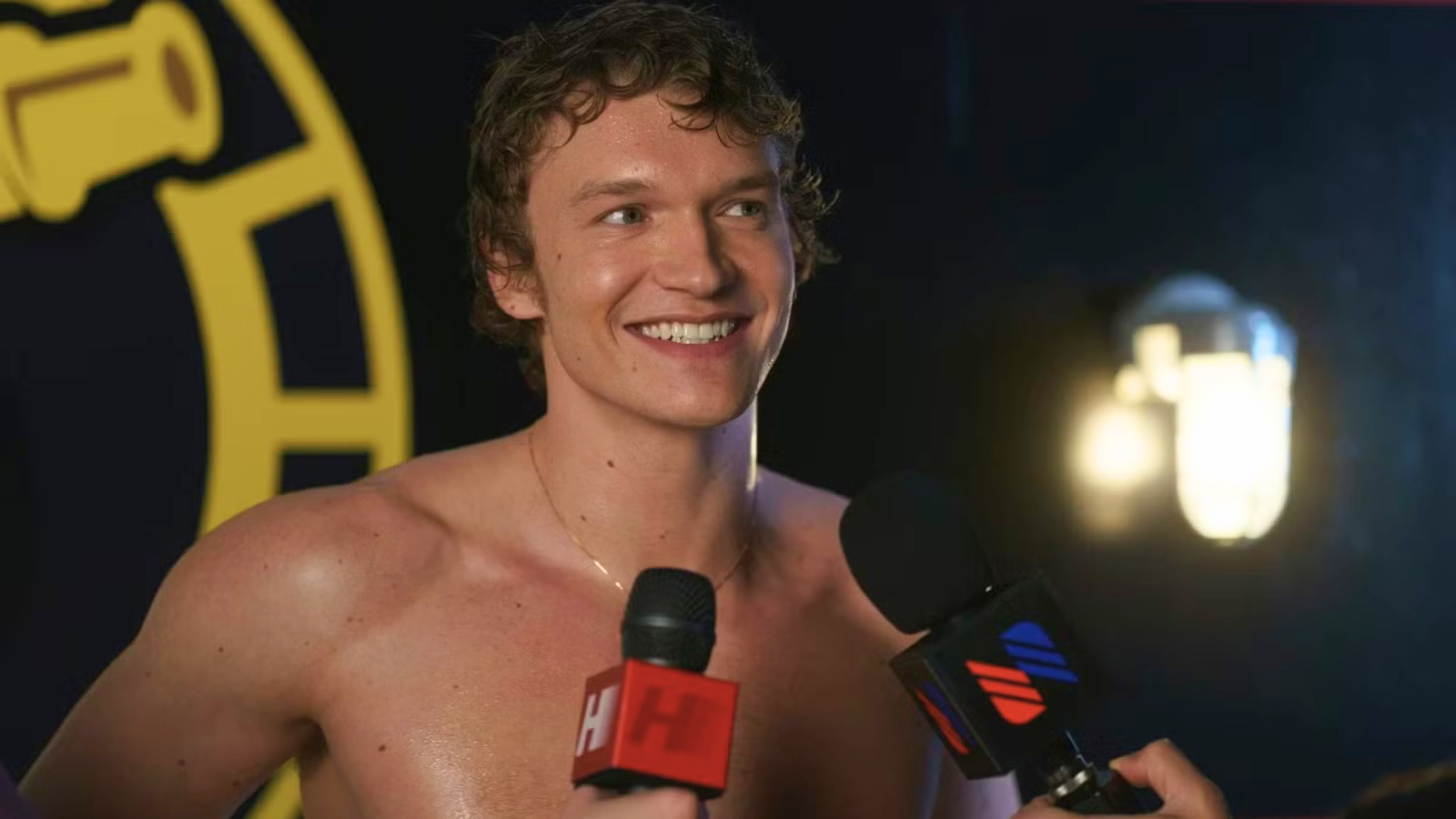
So, have you binged ‘Heated Rivalry’ already, or are you giving it the cold shoulder treatment?
I get it. When you’re told a new TV show is unmissable, the constant noise can make you dig your heels in.
However, there are several valid reasons why this ice hockey drama from Canada is so highly rated.
You’ll know by now that the main characters are pro athletes with an extreme case of ‘opposite attracts’ and that each episode comes with a warning about scenes of a sexual nature.
But there is plenty of psychology alongside the physicality, and for those of us who work in sports media, learnings to take from the show which will improve our industry and help to shift sports culture in the right direction.
Here are five things to think about as you hover over the play button (and with every effort made to avoid spoilers)…
Taking a ‘curious’ interest is healthy… stick with ‘Heated Rivalry’ for the whole season.
“You make me curious. Do I make you curious?” says Ilya to Shane in episode one.
“Obviously,” he replies.
Millions will want to see what the show is all about, but with its accelerated timeline and off-the-ice focus – as well as those much-hyped sex scenes – some viewers will struggle to stick with ‘Heated Rivalry’. They might find it uncomfortable to watch with other people in the room, and never come back to complete the season.
However, just as journalists should have an inquiring mind, they also need to have the full picture. The second storyline about team captain Scott Hunter and barista Kip starts in episode three, and via the narrative tool of a hockey commentator, it reminds us how the media often unwittingly puts extra layers of pressure on pro athletes.
The experiences portrayed in the show are very rarely expressed in sports, particularly men’s team sports. It’s fallen on hockey to be the vehicle for this, and by happy coincidence, Pride activations are imminent in the UK’s Elite League and NIHL competitions.
With February also being LGBT+ History Month and the Football v Homophobia’s Month of Action, there is a huge opportunity to harness ‘Heated Rivalry’ here in Britain. We know the Scott and Kip story, particularly as it unfolds from episode five into six, has its own resonance with athletes that’s different to the Shane and Ilya arc, and is well worth exploring (here’s looking at you, commissioning editors…)
@heatedrivalrycrave "You make me curious." 👀 Stream #HeatedRivalry on @cravecanada ♬ original sound – Heated Rivalry Crave
Embrace the queer side of sports, as well as the show’s escapist appeal.
While the gay relationships in ‘Heated Rivalry’ are generally less romanticised than the one depicted in ‘Ted Lasso’, the other major men’s sports TV show of recent times (and a comedy-drama), it’s hard to point to real-life parallels. In fact, within pro team sports, that still feels unlikely right now.
Conversely, women’s sports have a relative wealth of love stories, but the fictional versions haven’t yet hit the zeitgeist as sweetly. Alice Soper highlights this in a blog post titled ‘We All Deserve Sunshine’, writing: “Sports won’t make themselves safe for us, that’s up to us. But we have the women’s example to follow and now Heated Rivalry too.”
Here in the UK, data published last month by the Office for National Statistics again reflected the rise in recent years of people aged 16 to 35 recording their sexual orientation as bisexual or ‘other’, which includes being pan and/or queer.
In ‘Heated Rivalry’ (slight spoiler), it takes years for Ilya and Shane to arrive at a mutual understanding about how their individual sexualities are different. For actual sportsmen, who may feel freer at a younger age to experiment nowadays but remain constrained by the system, sunshine must still seem unattainable.
For Shane, the opening of his closet door is the “nightmare” scenario because he can’t imagine pushing it ajar himself. Instead of repeatedly asking why gay pro athletes don’t come out publicly, the media should aim to speak more broadly about sexuality and to work with inspirational LGBTQ people lower down the leagues.
Let people know that ‘keeping politics out of sport’ isn’t possible for athletes in anti-LGBTQ places.
If there’s any positive to be taken from FIFA’s preposterous Peace Prize, it should be to stop the pretence that political forces can be somehow neatly filleted out of football.
The same is true in pretty much every other sport, and in ‘Heated Rivalry’, viewers feel the chill wind of silence that blew through the Sochi 2014 Winter Olympics and are asked to consider how severe repression affects Russians like Ilya today.
In 2026, Pride will play its part at the FIFA World Cup. As citizens in Iran fight for their freedom, tournament organisers in Seattle are trying to continue with celebratory Pride Month plans that fate has decreed will coincide with Iran’s game with Egypt in the city.
Meanwhile, later in the year, the Summer Youth Olympics will be held in Dakar, the capital of Senegal, where there has been an anti-LGBTQ crackdown in recent months. Among around 2,500 athletes, the oldest will be 18, so some participants will surely have concerns, along with their parents and guardians.
In ‘Heated Rivalry’, there are limits for Ilya because of his nationality and matters of human rights. Our existence will always be political, in sports as well as in society, and we never get to park that completely – so allow us the context, at least.
@pagesix Connor Storrie learned Russian in an impressive amount of time to play Ilya Rozanov in "Heated Rivalry." 🎥: In Your Dreams with Owen Thiele/YouTube
♬ original sound – Page Six
Show there’s a continual purpose in coming out, beyond the first public moment.
‘Heated Rivalry’ shows us the significant impact that a sportsperson can have when their personal news becomes public knowledge. There are many factors which make these moments so rare in men’s team sports. One is that you become extremely reluctant to relinquish control.
Traditionally, the media hasn’t helped to change this mentality, and social media is only making it worse. But it’s not just about scrutiny – an athlete only gets one chance to come out publicly for the first time, and naturally, they want that moment to go perfectly.
In this day and age, it’s more likely to happen by way of an Instagram or TikTok post, so the sports media becomes responsible for sharing this news and putting it in context.
There are also lots of LGBTQ athletes, active and retired, who are out to family and friends and don’t expect to ever come out publicly.
In the TV show, the emotional strain of constant control begins to fade for good reasons, such as well-being, philanthropy, altruism and most powerfully of all, love.
There is a key scene involving Scott in which he acknowledges his purpose and how it sets him free. As sports journalists, we regularly have the option to invite empathy for LGBTQ athletes, and that shouldn’t be restricted to the relatively few occasions when athletes in elite men’s sports come out publicly.
Help prevent ‘searchlight’ speculation pushing powerful stories deeper into the shadows.
“Did anyone recognise you?” says Shane to Ilya, as the first season heads towards its conclusion. The fear of potential discovery is always there for the two hockey players, and the suggestion is that this will build when the show returns.
It sometimes feels as if social media has been set up to fuel gossip about the private lives of celebrities. A decade ago, this rumour mill was being visualised on screen by Rhys Chapman’s superb short film “WONDERKID” about a fictional gay Premier League player (still available to watch online).
And remember 2019, when an account called @FootballerGay amassed 50,000 followers before disappearing? Since then, it sometimes feels like there is more fake news than truth on X, where users can pay for a blue tick and make money from spreading disinformation.
Journalists and editors have a platform to push back against this. But in the worst instances, we’re seeing evidence of websites encouraging fans to join in the guessing game of who might be gay or bi, creating a ‘searchlight’ culture that risks outing closeted players.
A side-effect is that LGBTQ people in sports more generally keep a very low profile. This includes athletes who no longer play actively at the pro level and might otherwise feel ready to share their stories. Hudson Williams, who plays Shane, says several sportsmen have reached out to him privately (watch below).
This development, and the ongoing conversation around ‘Heated Rivalry’, should give those men optimism for the future – along with a more encouraging, empathetic sports media.
@siriusxm Heated Rivalry may be fun and fiery, but its impact reaches far beyond the screen. Hear more of Hudson Williams' interview on Andy Cohen Live at the link in the comments. #HeatedRivalry #HudsonWilliams #AndyCohen #SiriusXM ♬ original sound – siriusxm
Further reading…
Advice for elite LGBTQ+ athletes (British Elite Athletes Association, supported by Sports Media LGBT+)
Why ‘Heated Rivalry’ is highly relevant in the UK in January (Outsports)
Smash hit Heated Rivalry offers ‘reprieve’ for LGBTQ+ community, creates conversation among hockey fans (Shireen Ahmed, CBC)
The Sports Media LGBT+ website is a digital publishing hub for news, stories and opinion from across our global community of LGBTQ+ people and allies in sport – and it’s open to all.
We’re interested in your content. Share with us and tap into a worldwide audience through our Google News affiliate website and our popular social channels with over 20,000 followers. Contact us to discuss how we can help you. You can also learn more about our network, advocacy, and consultancy group here.