10 reasons why Football v Homophobia deserves your support in February
The annual Football v Homophobia Month of Action will be held in February 2026, in what is also LGBT+ History Month; every year, hundreds of FvH Champions amplify the anti-discrimination campaign’s message; find out why and how you can be part of it…
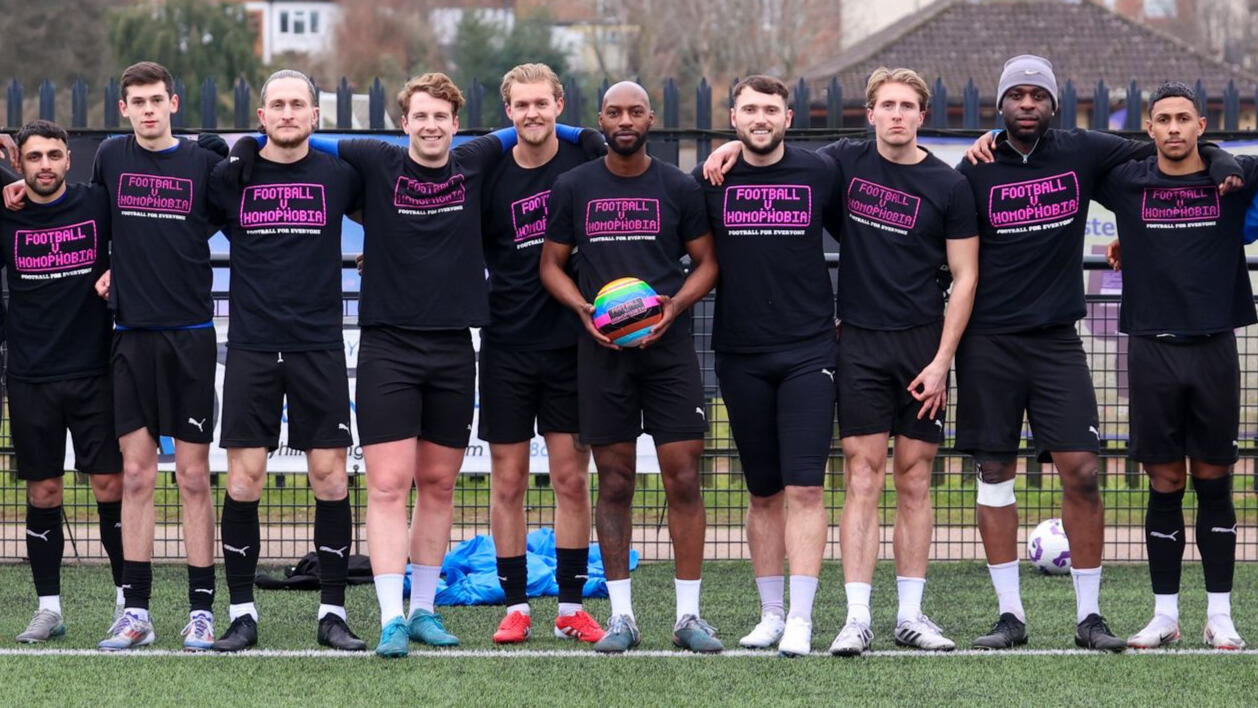
‘Football for Everyone’ – it’s a simple message, but one that bears repeating.
Since 2010, this has been the slogan of the Football v Homophobia campaign, which raises awareness of the damage caused by discrimination at all levels of the game.
February is the annual FvH Month of Action, during which clubs, leagues, teams, fan groups and organisations are encouraged to focus their efforts and make a difference.
Hundreds sign up to be FvH Champions at this time every year to help amplify the campaign’s message and reaffirm a commitment to creating safe and welcoming football spaces for all. See the list of 2025 Champions here, and those who have so far signed up to be 2026 Champions.
Everyone can play their part. FvH makes free resources and assets available, and you can purchase items including T-shirts, flags, match balls, captains’ armbands and badges from the FvH Shop.
So why is Football v Homophobia an important initiative to support in 2026? Here are 10 reasons why stepping up to be an FvH Champion makes sense…
Homophobia offences have risen again at grassroots, The FA has confirmed. Anti-gay language and behaviours spoil the environment and impact on participation – clubs and leagues need to clearly state that there is no place for this discrimination in our game.
The latest Home Office data shows a rise in the number of Premier League matches where incidents of homophobia were reported. However, this data doesn’t give the full picture. Results of a 2024 Out and Out Football survey suggest that three-quarters of fans who watch men’s games and who are LGBTQ lack the confidence to report. FvH and other organisations are calling on football clubs and bodies at all levels to take responsibility and publicly share their discrimination data, in context, which will allow for greater accountability and transparency.
Most of us engage with football every day through social media, but this experience has become increasingly dispiriting. ‘Ragebait’, bots, engagement farming and AI slop are all spiking on social platforms – this regularly results in posts that negatively target LGBTQ people in football. Official accounts and channels have the power to be a positive influence in this area.
There is very limited representation of gay and bi men in football, at all levels, whether playing, coaching, officiating or other roles. Some of these men would like to be more open about who they are, but they fear it’s not safe to do so, and they worry their teammates won’t accept them. Vocally supporting FvH is a constructive way to encourage healthy communication.
The women’s game has a great reputation for being inclusive, but it can still be a challenging place for LGBTQ players. The story of Mary Earps has recently reminded us of this. We can’t take inclusion for granted, and people’s experiences will differ depending on their personal circumstances.
With February also being LGBT+ History Month in the UK, there is a wider context to being an FvH Champion. At this time of year, it’s a chance to share empowering stories more widely, and provide those reminders that LGBTQ people have always been part of football – it’s just that they usually have less visibility than other communities, which limits representation.
Statistics produced by the charity Just Like Us tell us that around 80% of young people have heard homophobic language at school. Often, these words are used in P.E. and sports settings, and they discourage participation. Sharing the ‘Football for Everyone’ slogan in youth and Academy level environments is very effective, particularly when communicated through educational workshops, which FvH provide.
In 2025, workforce diversity data published by professional clubs in England and Wales provided insights into the number of LGBTQ people working in the game. This was higher than previously thought. With no Rainbow Laces activation last year, February is the opportunity for clubs and community trusts to hold their in-season activations.
Reports of transphobia sent to Kick It Out doubled in number last season. This specific type of discrimination is also rising, fuelled by misinformation and disinformation. It often accompanies misogyny and sexism. By helping people to identify what transphobia in the game looks like, football stakeholders can contribute towards reducing it.
The UK has the world’s only national LGBTQ football league, called the GFSN; there are more than 50 LGBTQ fan groups across the country; and we’re seeing more and more teams publicly stating that they hold inclusive values. FvH celebrates these efforts all year round, and works to bring people together and change lives for the better through football. By registering to be an FvH Champion, you’ll be part of something really powerful.
What’s next?
- Sign up for the FvH Month of Action here! You’ll receive a bespoke Welcome Pack. You can also find additional info on these dedicated pages – Grassroots; Non-league; Professional clubs; County FAs; Fan Groups; Trusts and Foundations; and Leagues.
- Take a look in the FvH Shop… why not buy a T-shirt? We’ll again be asking friends of the campaign to ‘Wear It Black and Pink’ on 19th February, to mark the International Day Against LGBTQphobia in Sport, and show support on social media.
- Read about the FvH Awards – this is our annual celebration event, recognising great work being done across the game. The shortlists are out, and the gala night is in London on 6th February. Interested in sponsorship? Get in touch!
- Reach out to connect – it’s the FvH Champions who make the campaign go further, through activations, events, content, and donations. Let’s work together and tackle discrimination in the game we all love.
Football v Homophobia is an international initiative that exists to challenge discrimination based on sexual orientation, gender identity and expression at all levels of football.
Launched in 2010, Football v Homophobia runs an annual Month of Action, which takes place every February in what is also LGBT+ History Month.
The Month of Action calls on individuals and organisations at all levels of football to take meaningful action to create more LGBTQ+ inclusive spaces in the game and address all forms of discrimination.
The Sports Media LGBT+ website is a digital publishing hub for news, stories and opinion from across our global community of LGBTQ+ people and allies in sport – and it’s open to all.
We’re interested in your content. Share with us and tap into a worldwide audience through our Google News affiliate website and our popular social channels with over 20,000 followers. Contact us to discuss how we can help you. You can also learn more about our network, advocacy, and consultancy group here.